

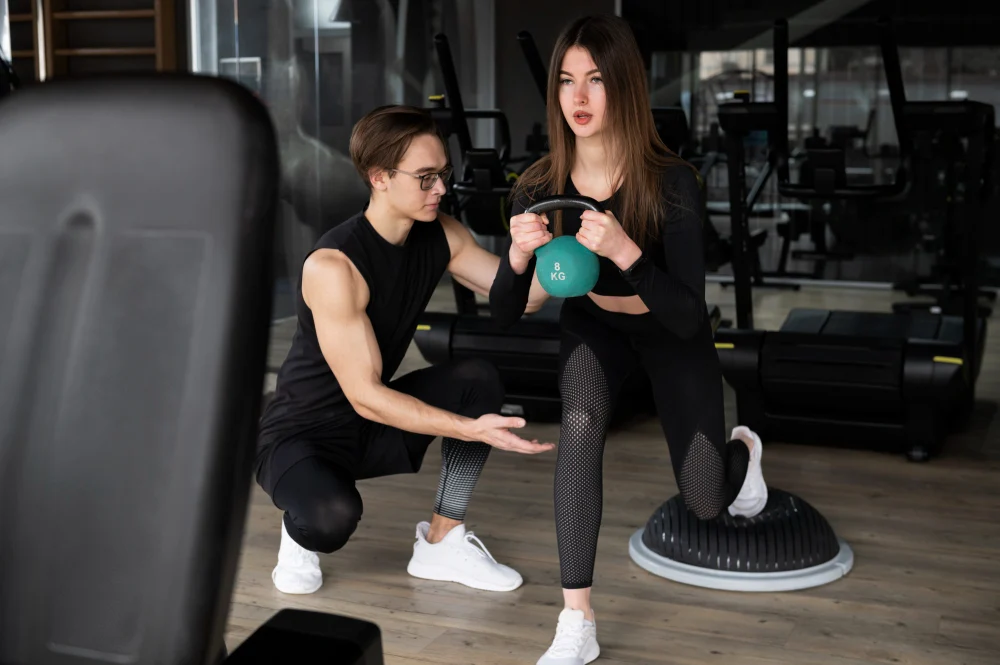
Ten repetitions appear to be a clear result. The number fits neatly into a workout log and allows loads to be compared. Yet one set of ten can contain stable range, controlled transitions and consistent speed, while another includes shortened movement, long pauses, shifting posture and several repetitions completed through compensation. Both sets receive the same count, but they do not deliver the same training information.
A personal trainer Singapore can make the log more useful by tracking repetition quality alongside load and count. Quality does not mean demanding one visually perfect technique from every client. It means defining the features that matter for the selected exercise, observing whether they remain repeatable and identifying when fatigue changes the task enough that another repetition no longer serves the intended outcome.
A Completed Repetition Needs a Standard
A repetition only becomes comparable when the beginning, end and movement criteria are defined. A squat may require a consistent target depth, while a row may require a controlled start position and a clear end range without excessive trunk movement.
The standard should reflect the client, exercise and goal. It can include an adjusted range for current mobility or comfort, provided that range is recorded. The purpose is not to make everyone move identically. It is to prevent the definition of a successful repetition changing silently as the set becomes difficult.
If the standard is unclear, repetition count rewards persistence rather than the intended movement.
Range Is Part of the Training Dose
Range of motion changes the mechanical task. Eight split squats to a consistent depth are not equivalent to eight repetitions that become progressively shallower.
A physical reference can improve tracking. Box height, machine setting, pin position or a marked target creates a repeatable range without requiring the coach to estimate every angle.
When range shortens, the trainer should decide whether the set has ended or whether the reduced range was planned. Both can be valid, but they should not be recorded as the same performance.
Control Reveals How the Load Is Managed
Control includes balance, joint position, the transition between lowering and lifting, and the ability to stop or reverse movement without losing organisation.
A client may complete all assigned repetitions while becoming increasingly dependent on momentum. The target muscles still work, but the exercise has changed. In some programmes, deliberate speed and momentum are appropriate. In conventional strength work, unplanned acceleration may remove the intended positional demand.
Control should be described through a few visible markers, not vague statements such as “good form”.
Speed Shows Fatigue Before the Set Fails
Repetitions usually slow as a set approaches the person’s current limit. Exact velocity devices can quantify this, but an experienced trainer can also observe meaningful changes.
The first repetition provides a local reference. If later repetitions slow sharply, require extended pauses or begin from altered positions, the remaining repetition count may overstate useful capacity.
Research on methods for monitoring resistance training discusses velocity and repetitions in reserve as tools for regulating load. In everyday coaching, the relevant principle is that repetition speed can add context to a completed count without requiring every client to use specialised technology.
Consistency Matters Across the Entire Set
One technically impressive repetition does not define the set. Trainers should look for repeatability from the first repetition to the last.
Consistency includes stance, grip, range, tempo and breathing strategy. Small natural variation is expected. Large changes may indicate that the load, target count or exercise complexity exceeds what can currently be repeated.
A useful question is whether another qualified coach would recognise each repetition as the same exercise performed to the same standard.
Quality Standards Should Match the Goal
A slow tempo squat and an explosive squat intentionally use different speed criteria. A rehabilitation-informed movement plan may use a restricted comfortable range, while a strength block may progressively expand it.
The trainer must therefore define quality in relation to purpose. Universal rules can become misleading when they ignore why the exercise was selected.
The client should know the primary standard before starting. Too many simultaneous rules can overload attention and reduce performance.
Use Technical Failure Separately From Muscular Failure
Muscular failure occurs when the person cannot complete the required action. Technical failure occurs when the defined execution standard can no longer be maintained.
For many personal training sets, stopping at technical failure is more productive. The client may still be able to move the weight somehow, but the remaining repetitions train a different strategy.
The threshold depends on the exercise and goal. A machine exercise may tolerate more local fatigue than a complex free-weight movement where position changes create a larger difference.
Record Quality Without Creating Excessive Administration
A useful tracking system should be simple enough to apply consistently. Trainers can add a short quality code to the normal load and repetition log.
For example:
- A: all repetitions met the range and control standard;
- B: minor change appeared in the final repetitions;
- C: repeated range, speed or control loss changed the exercise.
The code should be supported by a brief note when needed. It is not a grade for the client. It tells the coach whether the planned progression remains appropriate.
Video Can Improve Comparison When Used Carefully
Short video clips can reveal changes that are difficult to remember between sessions. Use a consistent camera position and compare similar loads and repetition ranges.
Consent and privacy matter. The client should know why recording is useful, where footage is stored and who can access it. Video should not be shared for marketing or casual discussion without separate permission.
The camera also captures only one angle. It supports coaching judgement rather than replacing it.
Quality Can Progress Before Load Does
A client may use the same weight for several weeks while range becomes more consistent, pauses become controlled and late-set speed improves. The number on the dumbbell has not changed, but capacity has.
These gains should be recognised. Increasing load before the current standard is repeatable can hide progress behind deteriorating execution.
Quality progression also builds a stronger reference for future overload. When the movement standard remains stable, an increase in load is easier to interpret.
Avoid Using Quality as an Excuse for Perfectionism
No repetition is identical, and clients do not need to earn strength training through flawless movement. Excessive correction can create hesitation and reduce useful effort.
Prioritise the one or two features most relevant to the exercise’s purpose and the client’s comfort. Allow harmless variation and recognise that technique can adapt as load rises.
Quality tracking should improve decisions, not make the client fearful of movement.
Let the Log Explain the Outcome
The personal training programmes at TFX Singapore focus on tailored strength, performance, movement and long-term progress. Recording repetition quality makes those goals more measurable because the log shows how the work was completed, not merely whether the number was reached.
Count remains valuable. It becomes far more informative when paired with range, control, speed and consistency. The best set is not always the one containing the most repetitions. It is the one that delivers the planned stimulus through a repeatable standard.
Frequently Asked Questions
Does every repetition need to look identical?
No. Natural variation is expected. The important question is whether the main range, control and technique standards remain consistent enough to preserve the exercise’s purpose.
Should a set stop when repetition speed slows?
Not automatically. Some slowing is normal. Stop or adjust when speed loss accompanies major technique changes or exceeds the session’s intended effort.
Is video necessary for tracking repetition quality?
No. It can improve comparison, but clear coaching standards and concise notes are sufficient for many exercises.
Can repetition quality improve without adding weight?
Yes. Better range, control, consistency and speed at the same load represent meaningful progress.